


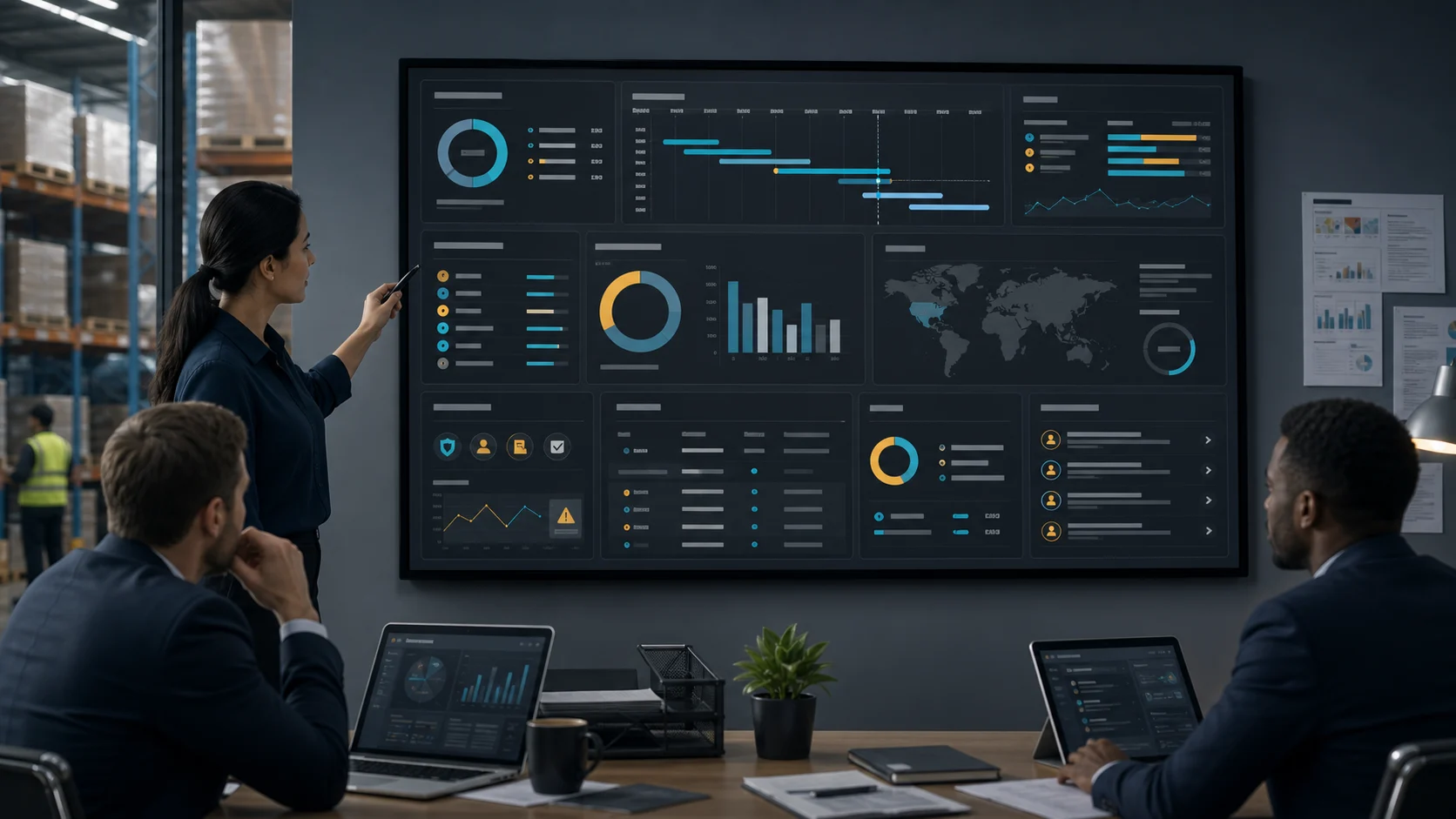
Contract renewal risk AI helps procurement teams identify supplier contracts that need attention before renewal, score vendor performance, explain savings or margin exposure, evaluate alternate suppliers, and route decisions to accountable owners. OPAG keeps the workflow governed with approved sources, role-based access, source-linked recommendations, approval thresholds, audit logs, and rollback before supplier commitments change.
Key takeaways
Procurement AI should start where decisions are repeated and evidence-heavy: renewal calendars, supplier scorecards, category savings, price-change review, alternate supplier recommendations, and approval packets.
The goal is not to let AI renew contracts or switch suppliers by itself. The goal is earlier visibility, better evidence, faster review, and accountable procurement approval.
OPAG connects contract renewal risk AI to supplier risk AI, the Ajwa procurement case study, and AI ROI modeling so procurement teams can protect savings without weakening controls.
What is contract renewal risk AI?
Contract renewal risk AI is a governed procurement workflow that monitors supplier renewals, scores performance, explains commercial exposure, recommends next steps, routes approval, and records the evidence behind each decision.
Procurement teams often track renewals, supplier performance, pricing, service levels, stock exposure, and category targets across disconnected systems. The risk is that a contract renews before the team has reviewed price movement, quality issues, delivery reliability, margin impact, and alternatives.
OPAG designs contract renewal AI around decision readiness. The agent can flag upcoming renewals, summarize supplier history, compare category spend, identify savings opportunities, prepare alternate supplier options, and route a review packet to procurement, finance, operations, or owner approval.
The answer-first definition is this: contract renewal risk AI helps procurement teams know which supplier agreements need action, why they matter, and who should approve the next step before a commitment changes.
Who needs contract renewal risk AI?
It is for procurement leaders, category managers, finance teams, operations owners, and group companies that need earlier renewal visibility, supplier scorecards, savings evidence, and controlled approval workflows.
The strongest fit is an organization with many suppliers, recurring contracts, price changes, lead-time pressure, inventory exposure, and category savings targets. Manual renewal review can work, but it often starts too late or lacks the evidence needed for a strong negotiation.
It is also useful for multi-industry groups where supplier decisions affect production, FMCG stock, restaurant supply, hotel operations, finance exposure, and customer commitments at the same time.
- Procurement heads who need a renewal calendar tied to scorecards, spend, risk, and approvals.
- Category managers who need supplier comparisons, price movement, service levels, and savings evidence.
- Finance leaders who need margin, cash, budget, and contract exposure before supplier terms change.
- Operations teams that need lead-time, quality, inventory, and substitution context before renewal decisions.
- Owners and auditors who need a clear record of recommendations, approvals, overrides, and outcomes.
What procurement workflows can AI support first?
The best first workflows are renewal risk alerts, supplier scorecards, price-change review, category savings analysis, alternate supplier recommendations, and approval evidence packets.
OPAG starts with workflows where the procurement team already has the evidence but not in one reviewable place. A renewal assistant can read approved contracts, purchase orders, supplier performance records, inventory context, finance thresholds, and approval notes to prepare a renewal risk packet.
A supplier scorecard assistant can compare delivery reliability, quality incidents, price movement, order value, service issues, stockout exposure, and margin impact. The procurement owner still decides whether to renew, renegotiate, escalate, or explore alternate suppliers.
- Renewal calendar risk with days to expiry, spend exposure, category owner, approval status, and missing evidence.
- Supplier scorecards covering delivery, quality, price variance, service issues, lead times, stock impact, and override history.
- Category savings governance that compares budget, negotiated terms, actual purchase behavior, and margin impact.
- Alternate supplier recommendations with source evidence, qualification status, price context, capacity risk, and approval needs.
- Owner dashboards that explain supplier changes, renewal readiness, approved actions, and savings outcomes.
How does governed contract renewal AI work?
It connects approved procurement, contract, inventory, finance, and supplier sources, applies permissions, retrieves evidence, drafts recommendations, routes approval, and logs decisions.
The workflow begins by mapping supplier owners, contract types, category rules, sensitive fields, approval thresholds, and the actions AI is allowed to support. Renewing agreements, changing suppliers, accepting price increases, or committing large orders should stay under accountable human approval.
The agent then acts as a procurement evidence assistant. It can identify a renewal risk, explain the supplier score, attach supporting records, suggest review options, and send the packet to procurement, finance, operations, or owner review.
- Connect sources: contracts, purchase orders, supplier master data, ERP, inventory, quality, delivery records, invoices, budgets, and approval history.
- Apply permissions: category, supplier, price, contract, margin, entity, department, and role-level access rules.
- Return evidence: renewal dates, price movement, order history, delivery variance, quality issues, inventory exposure, savings opportunity, and known gaps.
- Route approvals: renewals, price increases, alternate suppliers, emergency buys, substitutions, and high-value category decisions require review.
- Log outcomes: recommendation, source evidence, reviewer decision, edits, override reason, final action, and commercial impact.
How much does contract renewal risk AI cost?
Cost depends on supplier count, contract data quality, ERP and procurement integrations, category complexity, approval rules, reporting needs, and whether the AI only recommends or also creates downstream tasks.
A focused renewal assistant over approved contract files and purchase-order exports is simpler than a full procurement control layer connected to ERP, inventory, finance, supplier portals, category scorecards, and automated approval queues.
OPAG usually scopes one category, supplier group, or renewal window first. That keeps delivery tied to measurable outcomes such as renewal readiness, savings captured, price leakage reduced, approval speed, supplier exception aging, and owner confidence.
- Lower effort: renewal summaries and supplier scorecards from approved documents and exports.
- Medium effort: category dashboards, approval routing, alternate supplier packets, and savings reports.
- Higher effort: ERP integrations, supplier data pipelines, inventory and finance connections, automated task creation, and audit dashboards.
What governance does procurement renewal AI need?
It needs role-based access, source-linked evidence, approval thresholds, segregation of duties, supplier change controls, override tracking, monitoring, rollback, and audit trails.
Supplier renewal decisions can affect cost, continuity, product quality, stock availability, service levels, customer commitments, and margin. A weak AI workflow can recommend a supplier change without enough evidence or expose sensitive pricing and contract terms to the wrong users.
OPAG treats governance as the operating layer. The AI should show which sources support the scorecard, who reviewed the renewal packet, what threshold required approval, and what happened after the decision.
- Role-based access for supplier pricing, contracts, categories, margin, inventory, finance, and entity-level data.
- Human approval for renewals, supplier switches, price increases, high-value commitments, substitutions, and emergency buys.
- Segregation of duties so the same user does not prepare, approve, and commit sensitive supplier decisions without controls.
- Audit trails for source records, recommendations, score changes, approvals, overrides, final actions, and outcomes.
- Monitoring for repeated overrides, unsupported recommendations, stale supplier data, approval delays, and model drift.
How is renewal AI different from a procurement dashboard or CLM system?
A procurement dashboard shows metrics, and a CLM system stores contract workflows. Contract renewal risk AI explains which renewals need attention, links supplier evidence, recommends next steps, routes approval, and records the decision path.
Dashboards are useful for visibility, but procurement teams still need to interpret the data, collect supplier history, compare contract terms, check inventory exposure, and prepare approval packets. CLM systems can manage document workflows, but they may not connect operational performance, category savings, and supplier risk into one answer.
A governed AI workflow can sit around the existing procurement stack. It does not replace contracts or ERP. It turns the evidence into a reviewable recommendation that accountable managers can approve or reject.
- Use dashboards for visibility into spend, suppliers, category performance, and renewal dates.
- Use CLM systems for contract lifecycle records, documents, templates, and legal workflow.
- Use renewal risk AI when teams need supplier evidence, scorecards, recommendations, approvals, and audit trails.
- Use OPAG when supplier decisions must connect procurement, finance, inventory, operations, governance, and measurable ROI.
What does a safe first contract renewal AI rollout look like?
A safe first rollout chooses one supplier category or renewal window, limits sources, keeps AI in recommendation mode, requires procurement approval, and measures renewal outcomes before expanding.
A procurement team might start with the next 90 days of high-spend supplier renewals. The AI reviews contract dates, purchase volume, price changes, delivery performance, inventory exposure, quality notes, and finance thresholds, then prepares a renewal packet for category manager approval.
The team measures review lead time, savings identified, price leakage prevented, approvals completed, override reasons, supplier performance after renewal, and audit completeness. Those metrics decide whether the workflow expands to more categories or alternate supplier recommendations.
Why choose OPAG for procurement renewal AI?
Choose OPAG when procurement AI must connect supplier scorecards, renewal risk, category savings, alternate supplier evidence, approval routing, audit logs, and measurable operating outcomes.
OPAG builds procurement AI around accountable decisions. The system should make procurement faster, but it should also make supplier evidence easier to inspect and approval history easier to defend.
That keeps contract renewal AI aligned with the OPAG vision: governed AI agents that improve enterprise operations while preserving human ownership, traceability, and production-grade control.
Frequently asked questions
What is contract renewal risk AI?+
Contract renewal risk AI is a governed procurement workflow that monitors upcoming supplier renewals, scores vendor performance, explains commercial exposure, recommends next steps, and routes decisions for approval.
Should AI renew supplier contracts automatically?+
In most procurement environments, AI should prepare renewal evidence and recommendations rather than renew contracts automatically. Supplier commitments should require role-based permissions and human approval.
Can AI recommend alternate suppliers?+
Yes. AI can recommend alternate suppliers when it has approved data on price, capacity, quality, delivery, inventory exposure, contract status, and qualification rules, but procurement owners should approve supplier changes.
What data does supplier scorecard AI need?+
It usually needs contracts, purchase orders, supplier master data, invoices, delivery history, quality records, inventory status, category budgets, price changes, approval notes, and prior supplier outcomes.
How does OPAG measure procurement renewal AI ROI?+
OPAG measures renewal lead time, savings captured, price leakage prevented, stockout or emergency-buy risk reduced, approval speed, supplier performance improvement, audit completeness, and implementation cost.
What would this workflow look like in your business?
Talk with OPAG about the systems, agent steps and human decisions around it.
Discuss the workflow