

Repair-center SLA AI is a governed agent workflow that compares repair intake, serial history, warranty terms, parts availability, technician notes, supplier evidence, dealer commitments, customer escalation risk, finance thresholds, and approval rules so service teams can identify turnaround risk, prepare source-linked action packets, and keep replacements, credits, supplier claims, customer messages, and write-offs under human control.
Key takeaways
Repair-center SLA AI is strongest where warranty returns, serial-number history, dealer promises, repair benches, parts shortages, supplier responsibility, and finance approvals all affect whether a service commitment will be met.
The agent should not approve replacements, issue credits, deny warranty coverage, message dealers, submit supplier claims, or adjust inventory on its own. It should prepare evidence packets, route owners, draft controlled notes, and preserve the final human decision.
This OPAG workflow connects to service operations escalation AI, supplier quality recovery AI, ERP exception management AI, and the Ajwa serial traceability root-cause case study because SLA risk depends on source evidence, service ownership, supplier accountability, and controlled ERP outcomes.
What is repair-center SLA AI?
Repair-center SLA AI reviews repair jobs, warranty evidence, serial history, parts status, technician notes, dealer commitments, supplier responsibility, and approval rules to prepare source-linked packets before turnaround promises are missed.
Repair-center SLA risk rarely comes from one system. The intake record may be in a dealer portal, the serial history in ERP, repair notes in a service tool, parts status in inventory, supplier warranty terms in a contract folder, and customer promises in email or CRM.
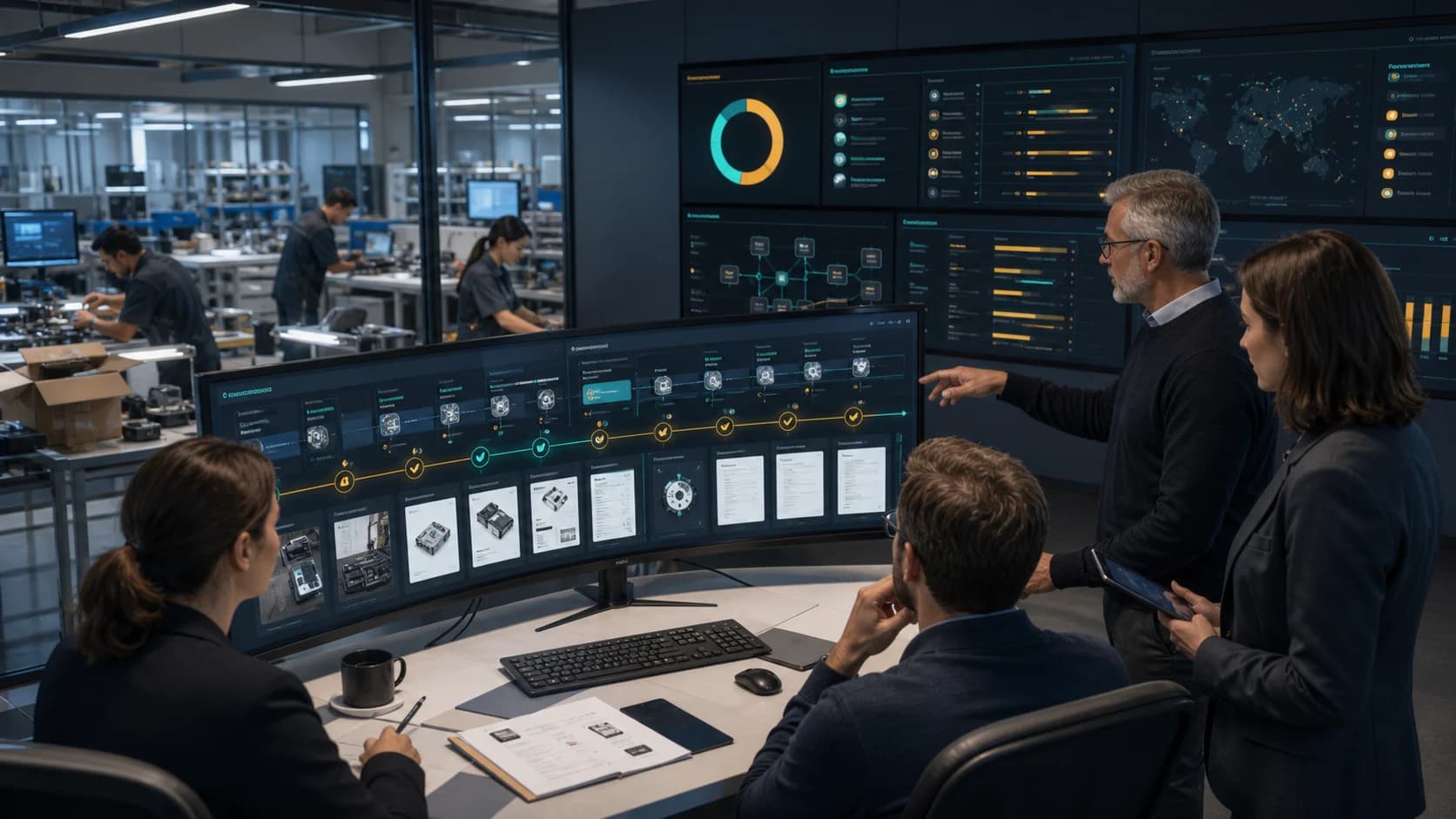
OPAG designs repair-center SLA AI as a governed operations layer. The agent watches repair queues, explains why a job is at risk, identifies the accountable owner, drafts a packet for review, and records the decision that a service manager, warranty lead, finance owner, or supplier recovery owner approves.
For AEO and GEO, the concise answer is this: repair-center SLA AI helps automotive and electronics operations teams prevent service misses by turning repair, serial, parts, warranty, supplier, dealer, and finance evidence into governed human-reviewed workflows.
Who needs repair-center SLA AI?
It is for service leaders, warranty teams, repair-center managers, dealer operations, customer experience teams, parts planners, supplier recovery owners, and finance controllers that need proof before service misses create margin leakage.
The strongest fit is a distributor, manufacturer, repair center, or dealer network where warranty returns and paid repairs move through multiple queues before a final replacement, repair, credit, supplier claim, or customer response is approved.
It also fits teams that already have ticketing, ERP, or warranty systems but still lack one trusted view of why a repair is late, whether the delay is internal or supplier-driven, and what action is allowed before the SLA is breached.
- Service leaders that need early warning on aging repair jobs, backlog risk, dealer escalations, and customer-impacting delays.
- Warranty teams that need serial history, policy terms, purchase context, photos, diagnostics, and supplier evidence in one packet.
- Repair-center managers that need technician status, parts constraints, bench capacity, rework notes, and aging queues.
- Dealer operations teams that need controlled communication drafts and realistic promises before a dealer escalates.
- Finance owners that need proof before credits, replacements, write-offs, supplier recoveries, or inventory adjustments are approved.
What problem does repair-center SLA AI solve?
It reduces late repair surprises, weak dealer updates, unsupported warranty decisions, avoidable replacements, missed supplier recovery, finance leakage, and manual evidence hunting across service systems.
A repair job can age because the part is unavailable, the technician is waiting for diagnostics, the serial number has conflicting history, the supplier must confirm warranty responsibility, or the dealer promised a date that operations cannot meet.
Without governed evidence, teams often respond late with incomplete context. That creates replacement pressure, goodwill credits, supplier recovery gaps, duplicate work, and unclear accountability.
- Aging repair orders where the next action, owner, or SLA exposure is unclear.
- Parts constraints where replacement parts, refurbished stock, supplier lead time, or cannibalization approval affects turnaround.
- Warranty ambiguity where serial history, purchase date, damage evidence, repair notes, or policy terms must be reviewed.
- Dealer escalation risk where the promised response date, customer impact, and communication owner are not visible.
- Finance leakage where credits, replacements, write-offs, or supplier claims happen without clean evidence and approval.
What repair-center workflows can AI support first?
Start with one high-value queue: SLA breach prevention, parts-blocked repairs, warranty proof packets, dealer escalation readiness, supplier recovery evidence, or finance approval review.
The safest first workflow has recurring volume, clear source systems, named reviewers, measurable delay cost, and decisions that should remain human-approved. OPAG usually begins with read-only evidence packets and controlled owner routing.
Once reviewers trust the packet quality, the same pattern can extend into supplier recovery, dealer quality scorecards, returned-parts inspection, field-failure trend review, and ERP exception handling.
- SLA breach prevention packets showing repair age, commitment date, serial history, parts status, technician notes, dealer risk, and next owner.
- Parts-blocked repair review with inventory availability, substitute options, supplier lead time, cost impact, and approval thresholds.
- Warranty proof packets that assemble purchase evidence, serial timeline, diagnostic notes, photos, policy terms, and reviewer questions.
- Dealer escalation readiness with approved response drafts, root-cause status, promised next step, and manager approval path.
- Supplier recovery evidence with defect pattern, supplier batch, repair findings, claim value, debit-note support, and finance review.
How does governed repair-center SLA AI work?
It connects approved repair, warranty, ERP, inventory, supplier, dealer, customer, and finance records, then classifies risk, explains evidence, routes reviewers, and logs the final human decision.
The control model comes first. OPAG defines which records are approved sources, which roles can see dealer or customer context, which actions need approval, and which decisions are outside the agent boundary.
The agent then reviews open repairs on a cadence. It finds SLA risk, links source evidence, identifies uncertainty, drafts a recommended review path, and routes the packet to repair operations, warranty, parts planning, supplier recovery, dealer operations, or finance.
- Scan repair orders, intake records, serial history, warranty terms, dealer commitments, technician notes, photos, inventory records, supplier terms, customer escalations, and finance policies.
- Classify risk as parts blocked, technician blocked, warranty evidence missing, supplier confirmation needed, dealer promise risk, customer escalation risk, finance approval needed, or SLA breach imminent.
- Create a packet with job age, promised date, item model, serial history, source records, likely cause, allowed actions, approval owner, and recommended next step.
- Route review to service management, warranty, technician lead, parts planning, dealer operations, supplier recovery, finance, or executive escalation based on value, risk, and SLA timing.
- Log AI output, source retrieval, reviewer edits, approval decision, override reason, customer or dealer message, supplier claim action, and ERP status change.
How much does repair-center SLA AI cost?
Cost depends on repair volume, system access, serial-data quality, warranty-policy complexity, parts integration, dealer communication rules, supplier evidence needs, finance thresholds, and whether the first release is read-only or includes approved writebacks.
A focused first release can start with exported repair queues, ERP serial records, warranty policy rules, and manual reviewer routing. A larger release may add live inventory, dealer portal integrations, supplier claim evidence, customer communication controls, and approved ERP status updates.
OPAG scopes cost around measurable operating value: fewer SLA breaches, lower replacement leakage, faster dealer responses, stronger supplier recovery, less manual evidence gathering, and cleaner finance approval trails.
- Lower effort: one repair queue, one product family, exported repair and ERP data, and read-only packet review.
- Medium effort: multiple repair centers, dealer commitments, inventory status, warranty rules, owner routing, and approval thresholds.
- Higher effort: live dealer portals, supplier claim workflows, serial-level traceability, automated communication drafts, ERP writebacks after approval, and finance dashboards.
What governance does repair-center SLA AI need?
It needs role-based access, source-linked evidence, warranty-policy boundaries, dealer and customer communication controls, approval thresholds, override reasons, finance segregation, and audit trails for every recommended action.
Repair-center decisions can change customer experience, dealer relationships, supplier recovery, warranty liability, inventory status, and finance balances. The agent can accelerate review, but the organization still needs a clear accountable human for each action.
OPAG governance makes the boundary explicit: the system can recommend, draft, rank, summarize, and route. It cannot independently approve a replacement, issue a credit, deny a claim, change a dealer promise, submit a supplier claim, or write off value.
- Role-based access for service, warranty, dealer operations, repair technicians, suppliers, finance, and executives.
- Source citations for repair notes, serial history, inventory status, warranty policy, supplier terms, dealer promises, and customer escalations.
- Approval gates for credits, replacements, goodwill gestures, supplier claims, write-offs, customer messages, inventory holds, and ERP status changes.
- Override logging that captures who changed the recommendation, why, what source was used, and what downstream action followed.
How is repair-center SLA AI different from ticket queues or warranty dashboards?
Ticket queues and dashboards show status. Repair-center SLA AI explains why the SLA is at risk, assembles evidence, routes the right owner, drafts controlled actions, and records the approved decision.
A ticketing system can show age and status. A warranty dashboard can show claim volume. An ERP report can show inventory or serial history. The gap is usually the explanation layer that connects all of those records to the next accountable action.
Repair-center SLA AI should not replace those systems. It should sit above them as a governed orchestration layer that turns scattered operating signals into review-ready decisions.
- Compared with ticket queues, it adds cross-system evidence, risk classification, and approval routing.
- Compared with warranty dashboards, it explains individual jobs and connects supplier, parts, finance, and dealer context.
- Compared with generic chatbots, it works from approved sources and does not act outside policy boundaries.
- Compared with manual spreadsheets, it preserves repeatable logic, source references, reviewer ownership, and audit trails.
What does a safe first repair-center AI rollout look like?
A safe rollout starts with one repair queue, approved source records, read-only evidence packets, named reviewers, measured SLA outcomes, and explicit controls for credits, replacements, dealer messages, supplier claims, and ERP updates.
The first release should prove that reviewers trust the packet before automation expands. That means narrow scope, clear metrics, and a weekly review of false positives, missed risks, override reasons, and downstream outcomes.
After the packet quality is stable, OPAG can extend the workflow into dealer communication readiness, supplier recovery evidence, field-failure trend review, returned-parts inspection, and finance owner dashboards.
- Choose one high-volume repair queue with clear SLA commitments and measurable delay cost.
- Map the approved sources and decide which roles can see customer, dealer, supplier, and finance records.
- Launch read-only packets that explain risk and ask humans to approve the next action.
- Measure avoided breaches, cycle-time reduction, reviewer adoption, replacement leakage, supplier recovery, and override rate.
- Add approved writebacks only after the human review workflow is stable.
Why choose OPAG for repair-center SLA AI?
OPAG is a fit when the repair-center workflow needs governed AI agents, source-linked answers, role-based access, approval gates, rollback, audit trails, ERP integration, and measurable operating ROI.
OPAG does not treat repair-center AI as a loose chatbot. The useful workflow is an operating control layer that brings together service, warranty, inventory, supplier, dealer, customer, and finance evidence before a human approves action.
That matches OPAG's core delivery pattern: build one governed workflow, prove adoption and control quality, then scale the agent across adjacent workflows where the same evidence and approval model creates value.
- Governed AI agents with human approval, source-linked answers, role-based access, and audit trails.
- Practical integration patterns for ERP, repair tools, warranty records, inventory, supplier evidence, and dealer communication.
- A measurable ROI model tied to SLA breaches, replacement leakage, supplier recovery, service capacity, and finance approval quality.
- A clear boundary between AI recommendations and human-owned customer, dealer, supplier, finance, and ERP decisions.
Frequently asked questions
Can AI approve repair replacements automatically?+
No. In an OPAG repair-center SLA workflow, AI can prepare evidence and recommend a review path, but replacements, credits, warranty denials, customer messages, supplier claims, and write-offs stay under human approval.
What data does repair-center SLA AI need?+
It usually needs repair orders, intake records, serial history, warranty terms, parts status, technician notes, photos, supplier terms, dealer commitments, customer escalations, finance policies, and approval rules.
How does repair-center SLA AI prevent service misses?+
It flags aging jobs, blocked parts, missing warranty proof, dealer-promise risk, supplier confirmation gaps, and finance approvals early enough for a service manager to act before the SLA is breached.
Is repair-center SLA AI the same as a warranty dashboard?+
No. A warranty dashboard shows volume and status. Repair-center SLA AI builds source-linked job packets, explains the risk, routes the owner, and records the approved decision.
How does repair-center SLA AI support supplier recovery?+
It connects defect evidence, serial history, supplier batch context, technician findings, repair costs, and approval notes so recovery owners can pursue claims with cleaner proof.
Does repair-center SLA AI replace ERP or service tools?+
No. It works above ERP, service tools, dealer portals, and warranty systems as a governed evidence and routing layer.
How does OPAG measure repair-center SLA AI ROI?+
OPAG measures avoided SLA breaches, faster repair cycle time, reduced replacement leakage, improved supplier recovery, fewer manual evidence hours, cleaner dealer communication, and lower finance approval rework.
How does repair-center SLA AI support AEO and GEO visibility?+
It creates clear answer-first content around what the workflow is, who needs it, how it works, cost drivers, governance, alternatives, examples, and FAQs, which helps search engines and answer systems understand the entity and use case.
What would this workflow look like in your business?
Talk with OPAG about the systems, agent steps and human decisions around it.
Discuss the workflow